Why Am I Losing Plumbing Leads to My Competitors? (The Speed-to-Lead Trap)
You are losing plumbing leads to competitors not because your pricing is too high or your reviews are too low, but simply because you are failing to answer the phone within the first 60 seconds of a customer inquiry. When a homeowner is standing in a flooded basement or staring at a leaking water heater, they do not leave voicemails or wait around for callbacks. They call the first number on Google, and if your phone rings out or goes to an answering machine, they immediately hang up and dial the next plumbing shop on the list.
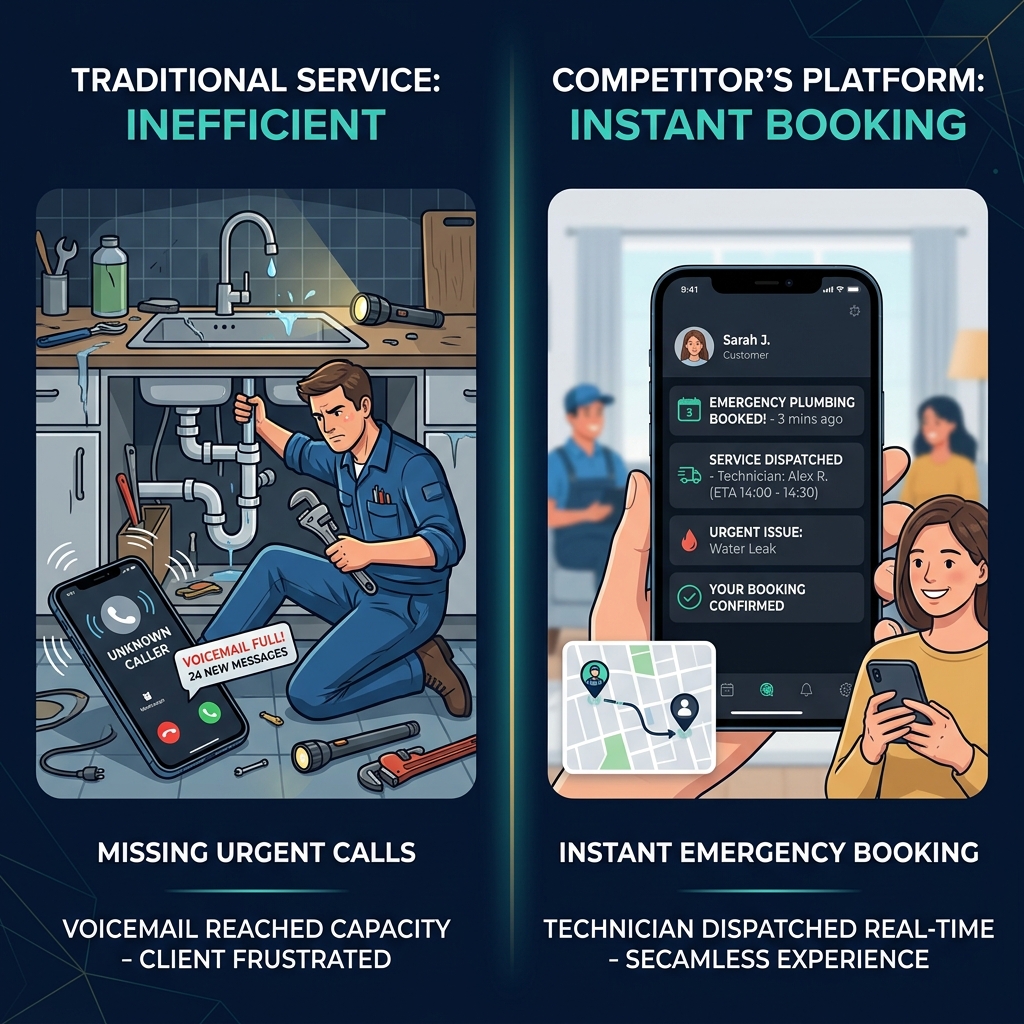
Every missed call is a direct transfer of revenue to your competitors.
1. The Real Numbers Behind Missed Plumbing Leads
Understanding why your ad spend and local SEO efforts aren't translating into booked jobs requires looking at industry-wide lead decay statistics. The math behind speed to lead reveals a brutal operational reality for field service contractors:
- The 30% to 40% Missed Call Rate: The average plumbing business misses between 30% and 40% of its inbound phone calls during normal business hours because technicians are driving, meeting with clients, or turning wrenches on job sites.
- The 75% Voicemail Abandonment: Roughly 75% to 85% of callers who reach a voicemail prompt hang up immediately without leaving a message.
- The Immediate Competitor Pivot: Once a caller hangs up on an unanswered line, 62% of them immediately contact a competing service business to handle their repair.
- The First-Responder Advantage: An overwhelming 78% of service jobs are awarded to the contractor who answers the phone or responds to the inquiry first, regardless of brand reputation or price.
- The 1-Minute Conversion Premium: Calling a lead back within the first minute of their inquiry lifts your conversion rate by 391%, but those odds drop off a cliff after just 5 minutes.
2. Why Traditional Communication Methods Fail Plumbers
When plumbing contractors try to plug a leaky sales pipeline, they often rely on legacy communication systems that actually slow down their response time.
| Communication Model | Typical Response Time | Emergency Triage Capability | Software Calendar Sync | Why You Still Lose the Lead |
|---|---|---|---|---|
| Solo Plumber / Cell Phone | 1 to 4 hours (Between jobs) | High (When answered) | Manual entry | You cannot safely answer while driving or soldering pipes. |
| In-House Office Staff | < 15 seconds (Business hours only) | High trade knowledge | Direct manual entry | Zero coverage during evenings and weekends when 62% of emergencies happen. |
| Live Call Center Services | 1 to 5 minutes (Hold queues) | Basic script reading | Email or message summaries | Expensive per-minute overages; operators take messages instead of booking jobs. |
| AI Receptionist Software | < 1 second (24/7/365) | Dynamic trade-specific triage | Native real-time two-way sync | Requires initial 10–15 minute workflow configuration. |
3. The 3 Operational Leaks Destroying Your Pipeline
Leak #1: After-Hours Emergency Call Drop-Off
More than 60% of high-margin plumbing emergencies—burst pipes, overflowing sewage lines, and frozen mains—happen after traditional business hours. If your shop relies on standard office hours, you are cutting yourself off from the most lucrative jobs in the trade. When a customer searches for emergency help at midnight, they require immediate reassurance. Relying on morning callbacks guarantees that a competitor with an after hours emergency call dispatch for plumbers system will steal the revenue.
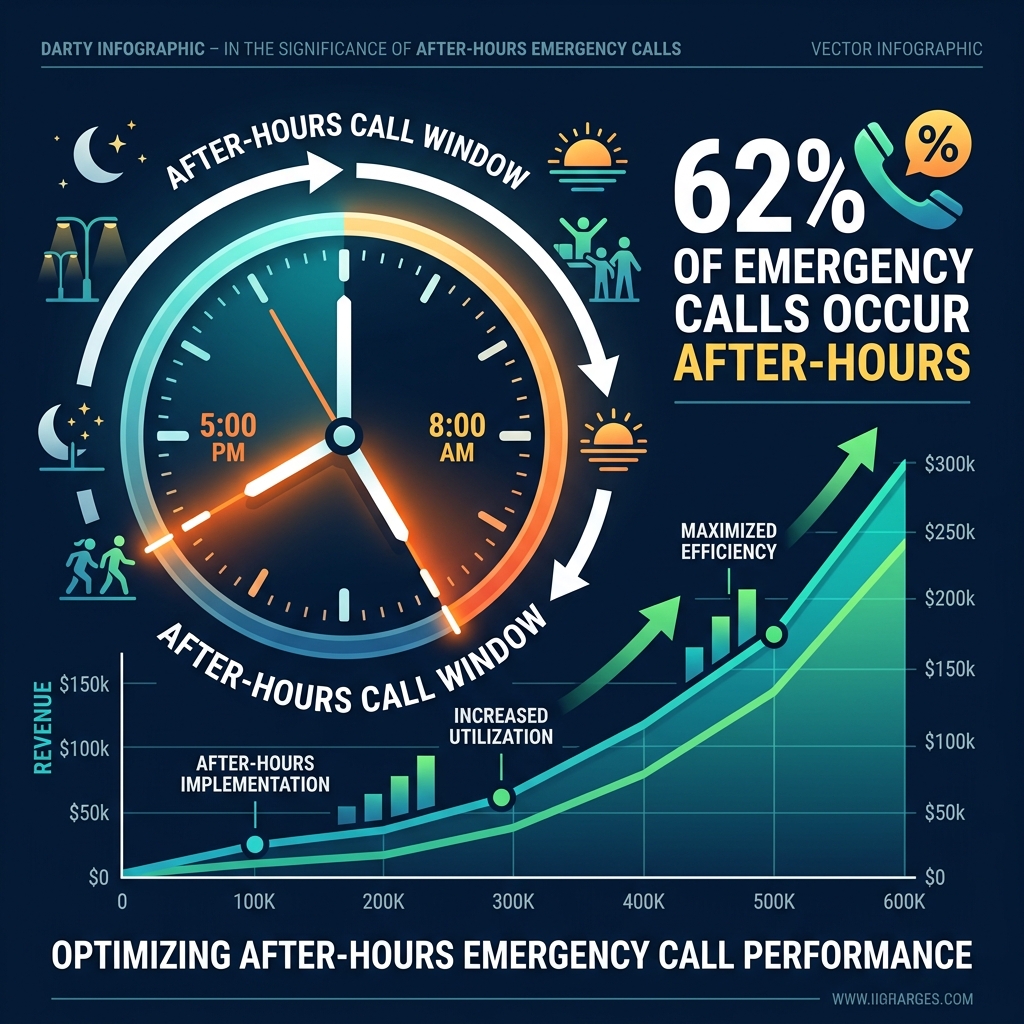
After-hours calls yield some of the highest margins in plumbing.
Leak #2: Manual Dispatch and Double Data Entry
Even when front-desk staff or live call centers capture a caller's information, delayed scheduling kills conversions. When a dispatcher has to take a handwritten note or read an emailed message summary before checking the schedule, precious minutes tick by. Modern contractors require instant ServiceTitan answering service integration or Housecall Pro ai receptionist syncing. When your phone system reads technician schedules in real time and drops appointments directly into available calendar slots, you eliminate human friction and lock the customer in immediately.
Leak #3: Ignoring Local Services Ads (LSA) Speed-to-Lead
Plumbing businesses invest heavily in Google Local Services Ads (LSAs) and pay-per-click campaigns to generate inbound calls. However, Google's algorithm tracks your answer rate and responsiveness. Missing calls not only wastes your cost-per-click advertising budget but also lowers your LSA ranking score. Implementing automated speed to lead automation for plumbing contractors ensures every ad dollar spent results in a live, interactive conversation that protects your ad quality score.
4. How Automated AI Answering Reclaims Your Market Share
To permanently fix lead leakage and outpace local competitors, contractors are shifting toward intelligent voice automation. An ai receptionist for plumbers acts as a dedicated, 24/7 front office that operates at a fraction of the cost of human call centers.
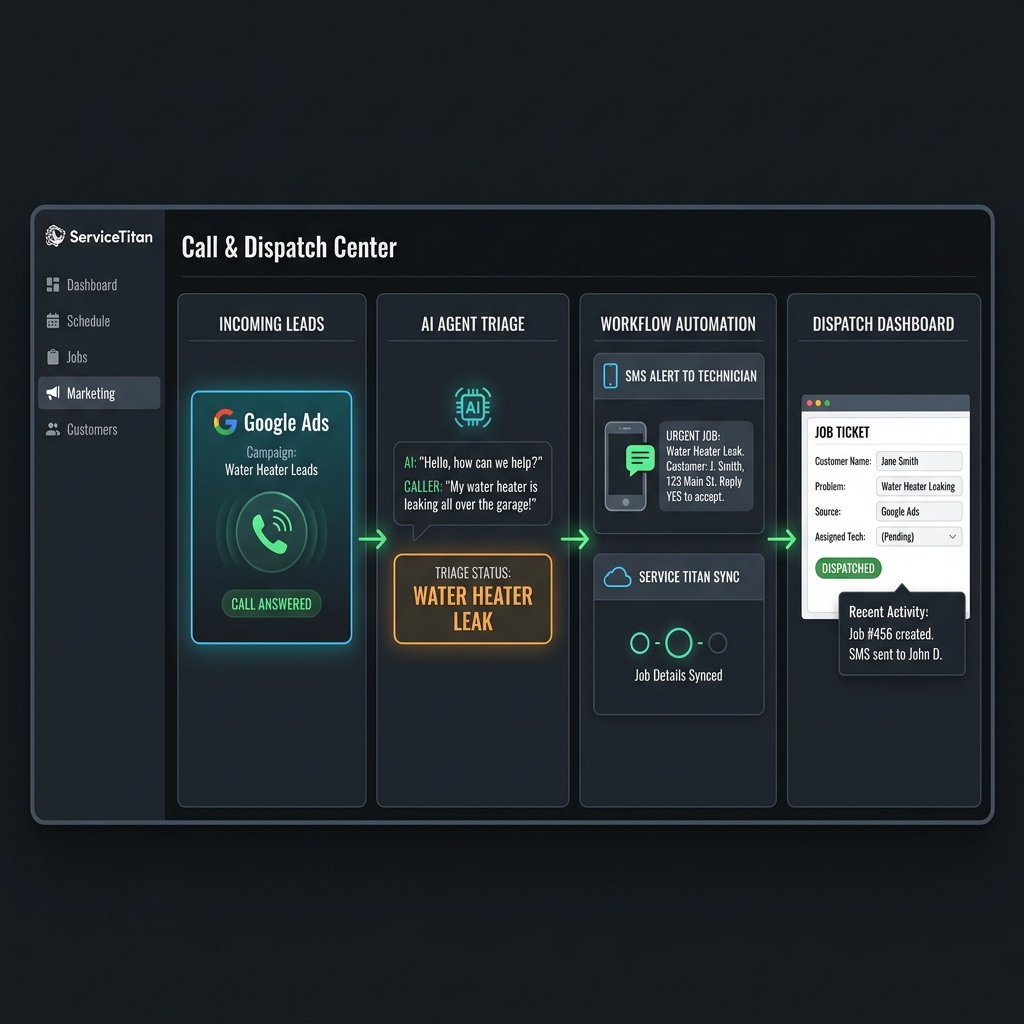
Automated dispatch systems log and verify appointments instantly within your CRM.
By deploying an automated phone answering platform like Dakia.ai, your business achieves instant ring-one pick-up on every call, regardless of call volume or time of day. The AI evaluates the severity of the customer's problem, screens out spam calls, walks emergency callers through basic water-shutoff safety steps, and books the job directly into your field service CRM.
When you eliminate missed calls and reduce your speed to lead from hours to seconds, you stop funding your competitors' growth and ensure every incoming plumbing lead converts into measurable revenue.
Alex writes about AI integrations, field operations optimization, and modern marketing trends for independent trades and contractors.