AI vs. Live Answering Services for Plumbers: Capturing Every Emergency Lead
For a residential or commercial plumbing contractor, an unanswered phone directly translates to handed-over emergency jobs to local competitors. When a homeowner experiences a basement flood or a broken water heater, they do not leave a voicemail; they simply call the next contractor on Google.
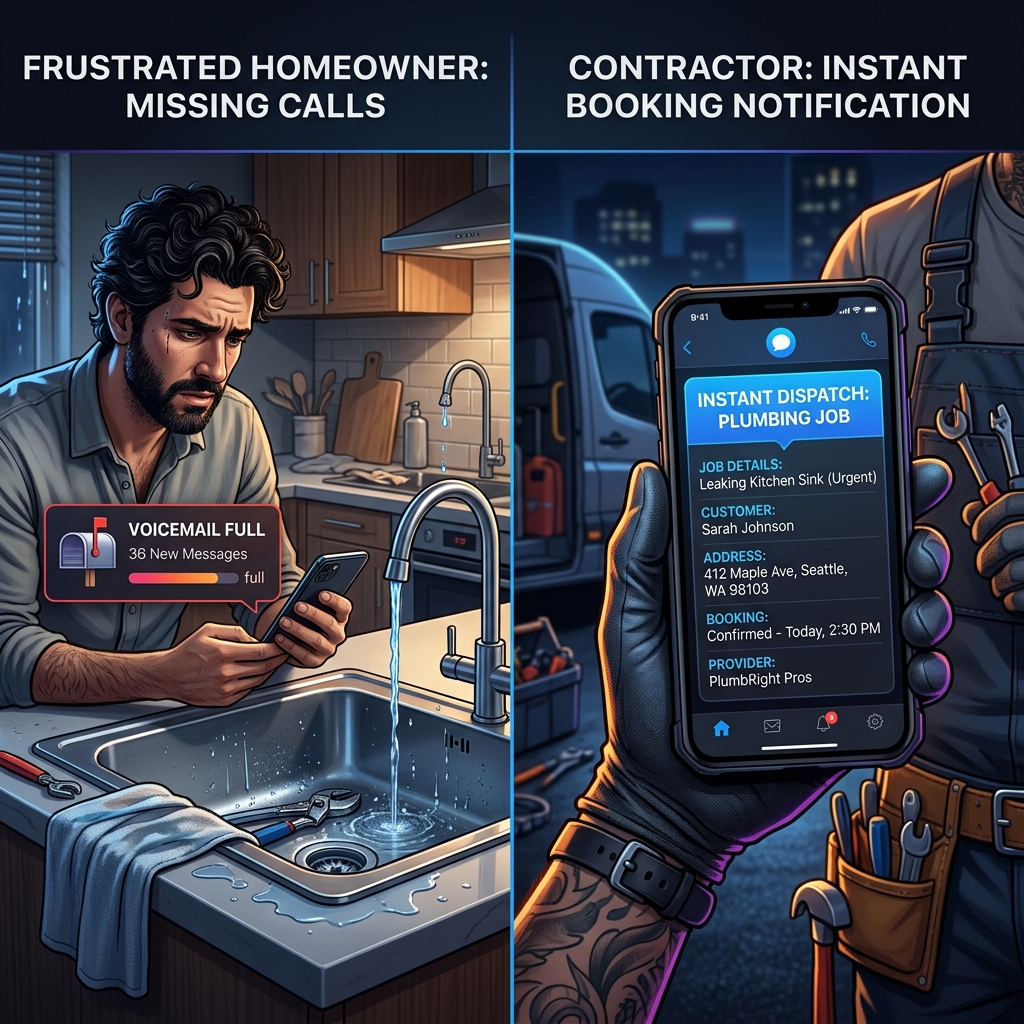
AI receptionists capture up to 60% of previously missed plumbing leads instantly.
Industry data indicates that automated receptionists can capture 40% to 60% of inbound calls that previously went unanswered or ended in abandonment. Yet, relying on traditional plumbing call center services or hiring additional in-house administrative staff often introduces bottlenecks, script-reading errors, and restrictive after-hours limitations. Implementing an AI receptionist for plumbers modernizes how contractors handle inbound traffic, transforming every ring into a qualified, booked job 24/7/365.
Why Traditional Plumbing Call Center Services Miss the Mark
Contractors evaluating a virtual receptionist for plumbing contractors often start by looking at legacy human call centers. While human operators provide a live voice, standard call centers are rarely optimized for the specific urgencies of the plumbing trade:
- Generic Scripting: General call center agents handle inquiries for dozens of different industries simultaneously. They often struggle to differentiate between a routine faucet drip and a critical main line backup, leading to miscategorized dispatch priorities.
- Delayed Escalations: Traditional services frequently take detailed messages and email or fax them to the office, creating a lag between the customer's cry for help and the technician's notification.
- Unpredictable Metered Billing: Many live services penalize growth by charging strict per-minute overages or call-count caps, making budgeting difficult during peak seasonal freezes or storm surges.
Performance Comparison: AI Receptionist vs. Live Operators
When analyzing an ai vs live answering service for plumbers, the evaluation must center on speed, accuracy, and operational capacity. An intelligent software layer eliminates the structural friction inherent in human-only call centers.
| Operational Metric | Traditional Live Call Center | In-House Front Desk | AI Receptionist Software |
|---|---|---|---|
| Availability | 24/7 (Subject to operator hold times) | Business hours only (~40 hrs/week) | 24/7/365 instant pick-up |
| Call Concurrency | Callers placed on hold during regional call spikes | One call handled at a time; others go to voicemail | Unlimited simultaneous calls answered on ring one |
| Plumbing Triage | Relies on generic, rigid Q&A scripts | High trade knowledge | Pre-trained on plumbing emergencies and custom rules |
| CRM/FSM Booking | Manual data entry or emailed message summaries | Direct manual scheduling | Native real-time calendar and dispatch syncing |
| Overhead Scalability | Penalized by metered per-minute overage rates | Requires hiring, training, and managing staff | Predictable flat-rate software scaling |
Core Features That Drive High-Margin Plumbing ROI
To deliver maximum value, automated phone systems must go beyond basic message taking and act as an active, intelligent dispatcher. High-converting platforms rely on three functional pillars:
Automated After-Hours Emergency Dispatch
A burst pipe at 2:00 AM represents one of the highest-margin jobs in the industry. Purpose-built after hours emergency call dispatch for plumbers uses natural language processing to detect urgency. When a caller mentions "flooding," "sewage backup," or "no hot water in winter," the system bypasses standard booking queues and executes automated burst pipe call routing for contractors. It instantly texts or pages the on-call technician with the caller's address, problem severity, and contact details within seconds.
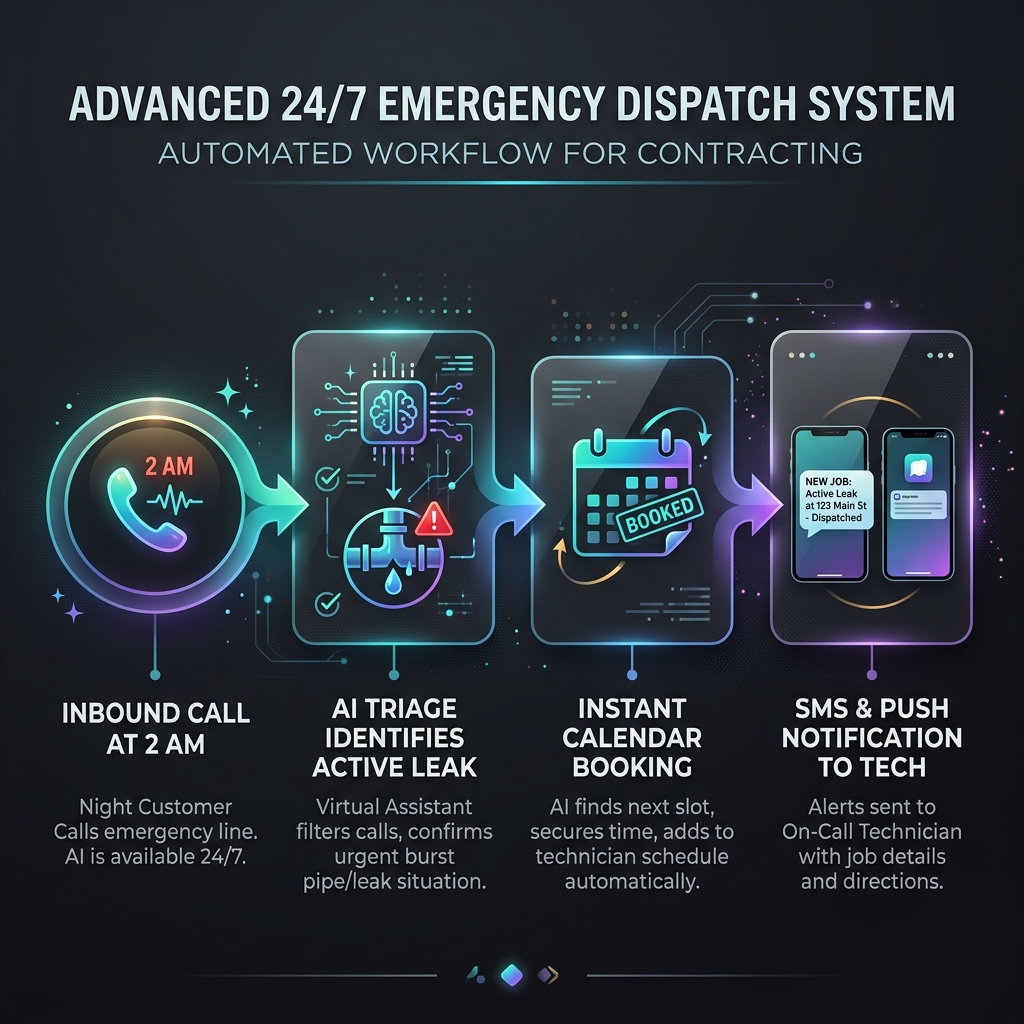
Automated emergency triage logic immediately loops in on-call technicians.
Seamless Field Service Software Integration
A communication tool that requires office staff to manually copy and paste call notes back into a database creates unnecessary admin work. Elite voice platforms feature direct ServiceTitan answering service integration, alongside native syncing for tools like Housecall Pro and Jobber. The AI checks real-time technician availability, creates the customer record, logs full call transcripts, and drops the appointment directly into the dispatch board without human intervention.
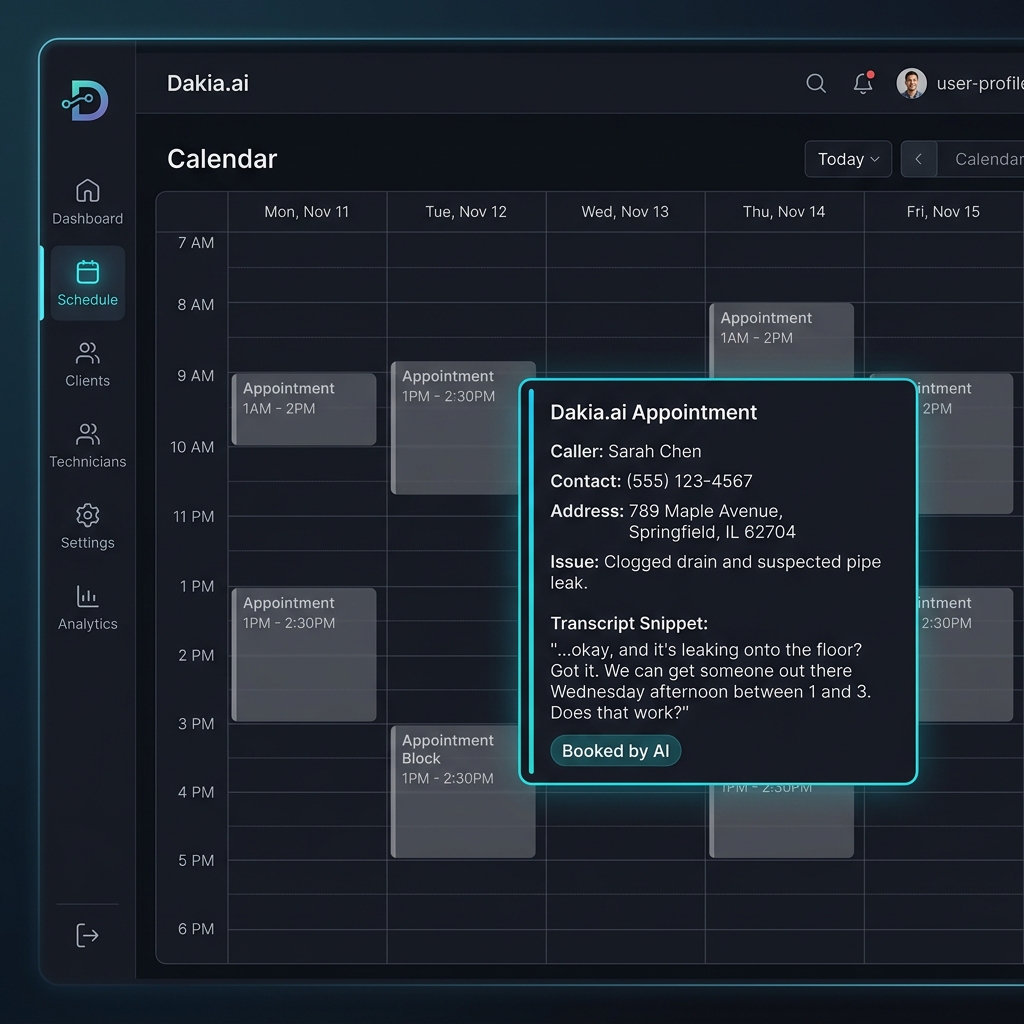
Native integrations drop qualified bookings straight into your dispatch board.
Instant Speed-to-Lead & Zero Busy Signals
Responding to a fresh lead within one minute can lift conversion rates by nearly 400%. While human operators get overwhelmed during regional cold snaps—forcing customers into hold queues where they eventually hang up—automated receptionists handle infinite concurrent calls. Every lead from Google Local Services Ads, organic search, or missed calls receives an immediate, conversational response that locks in the appointment before they can call a competitor.
How Automated Phone Answering Transforms Daily Operations
Transitioning a plumbing operation to an AI-first communications stack requires zero downtime or complex hardware installations. Contractors maintain their established business phone numbers and implement simple conditional call forwarding. The system can be configured to pick up only after the third ring when the office is busy, or switch to 100% coverage automatically when the clock hits 5:00 PM.
By replacing rigid call center scripts and restrictive office hours with an automated platform like Dakia.ai, plumbing contractors eliminate missed opportunities, recover high-value emergency jobs, and streamline their dispatch board. The result is a self-sustaining front desk that scales effortlessly with call volume, keeping technicians scheduled and protecting the bottom line around the clock.
Alex writes about AI integrations, field operations optimization, and modern marketing trends for independent trades and contractors.